




Industrial Inkjet Printer for Batch Coding & Packaging Printing
What Is an Industrial Inkjet Printer?
An industrial inkjet printer is a non-contact printing system designed for high-speed coding and marking on production and packaging lines. Unlike standard office inkjet printers, industrial models operate continuously in demanding manufacturing environments, printing variable information directly onto products or packaging as they move along conveyor systems. These printers use specialized inks and print heads engineered for durability, speed, and reliability. They integrate seamlessly with production lines, enabling automated printing without physical contact with the substrate, which prevents damage to products and maintains line speeds of up to several hundred meters per minute.
What Can an Industrial Inkjet Printer?
Industrial inkjet printers are used for coding and marking on products and packaging. Common printing applications:
- Manufacturing date
- Expiry date and best-before date
- Batch number and lot code
- MRP (Maximum Retail Price)
- Barcodes for inventory tracking
- QR codes for product information
- Serial numbers and unique identifiers
- Shift codes and production line data
- Variable information that changes automatically between products
Types of Industrial Inkjet Printers
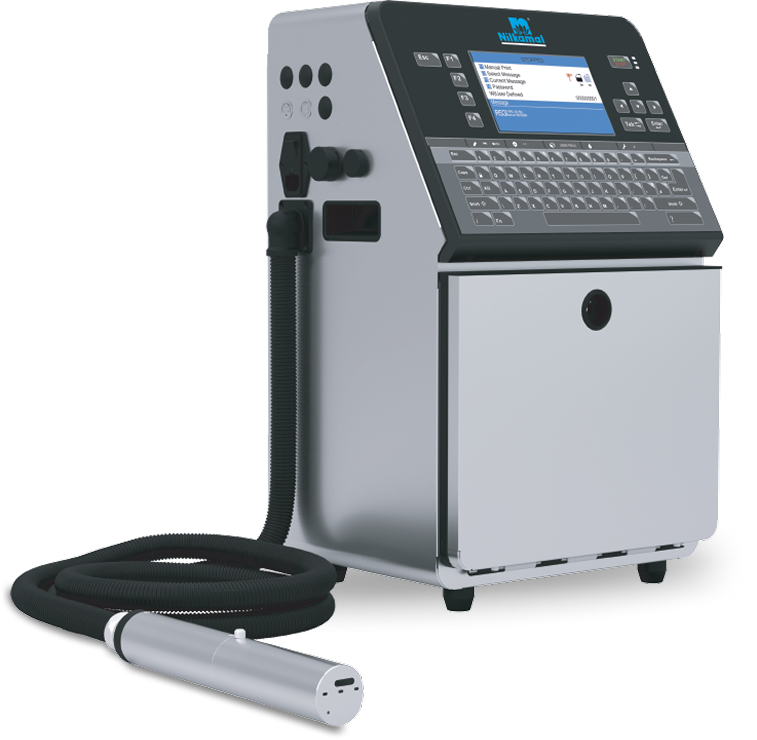
Continuous Inkjet Printer (CIJ)
- Best for high-speed production lines
- Prints on uneven and curved surfaces effectively
- Ideal for bottles, cans, cables, pipes, and irregular shapes
- Uses fast-drying solvent-based inks
- Commonly used in FMCG, beverage, and dairy industries
- Reliable for 24/7 operation
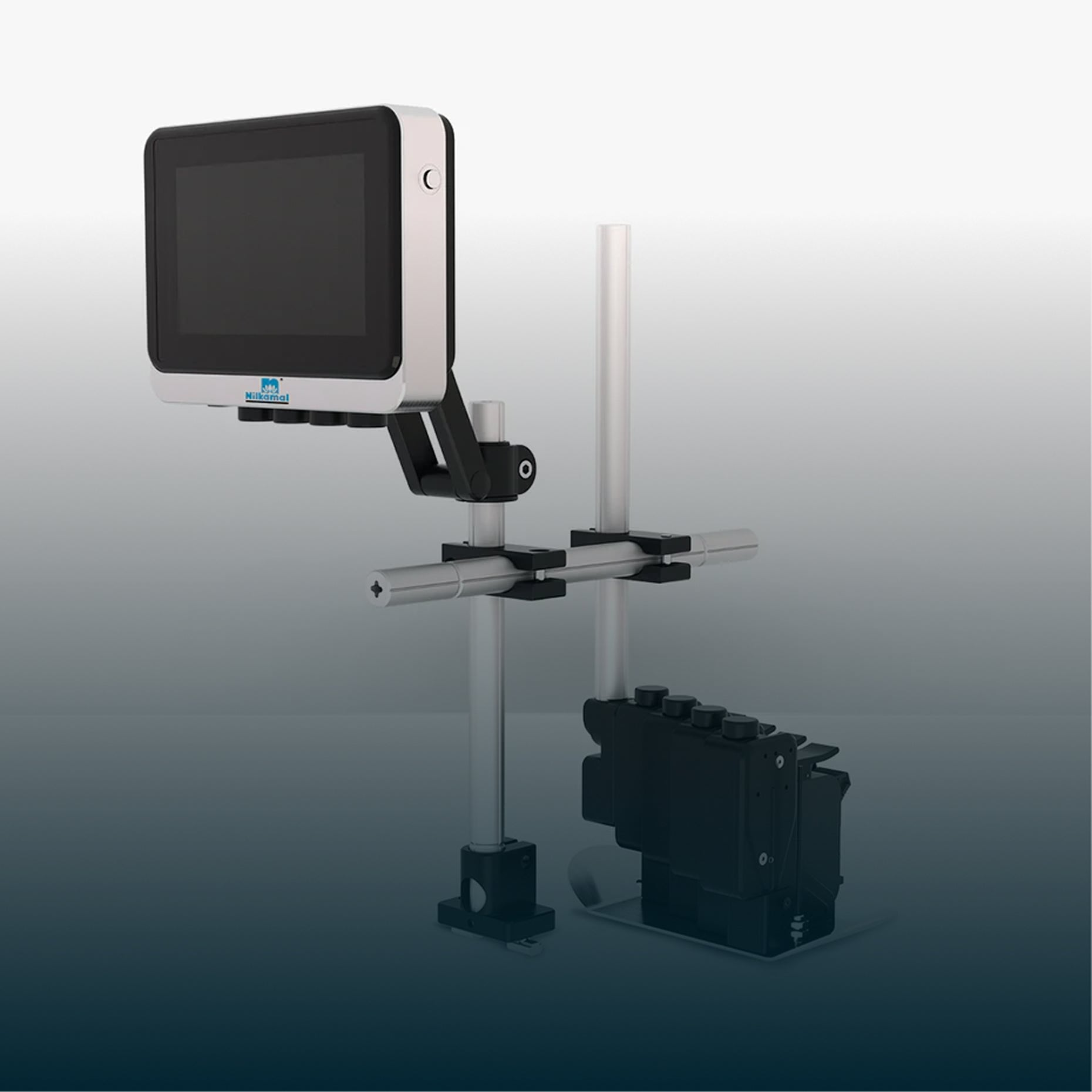
Thermal Inkjet Printer (TIJ)
- Delivers high-resolution, sharp print quality
- Suitable for cartons, boxes, labels, and flat packaging
- Uses replaceable ink cartridges – low maintenance requirement
- No complex cleaning procedures needed
- Easy to integrate into existing production lines
- Quick changeover between different print jobs
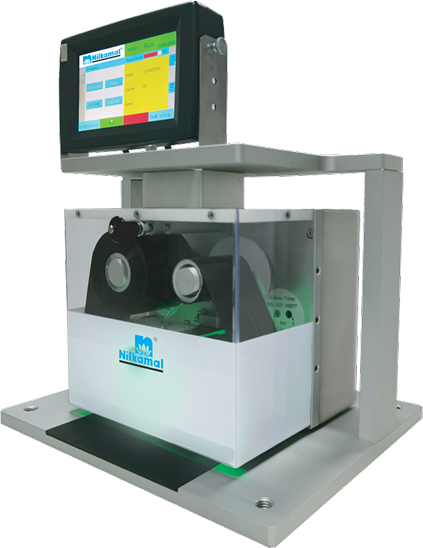
Thermal Transfer Overprinter (TTO)
- Designed specifically for flexible packaging films
- Produces durable, smudge-resistant prints
- Works with form-fill-seal machines and flow wrappers
- Commonly used in food packaging, snacks, and pouch packaging
- Uses thermal ribbon for high-contrast printing
- Excellent adhesion on plastic films
Materials & Industries
Industrial inkjet printers accommodate a wide range of substrate materials encountered in manufacturing. They print effectively on plastic bottles and pouches, corrugated and folding cartons, flexible packaging films, glass bottles and containers, metal surfaces including cans and caps, and extruded materials such as cables and pipes. Surface porosity, texture, and material composition determine ink selection and printer configuration.
These systems serve multiple industries with stringent coding requirements. FMCG manufacturers rely on industrial inkjet for consumer goods packaging. Food and beverage producers use them for date coding and regulatory compliance. Pharmaceutical companies depend on precise batch and expiry information printing. Cosmetics manufacturers require high-quality codes on diverse packaging types. Across all packaging and manufacturing sectors, industrial inkjet printers provide the speed, accuracy, and flexibility needed for modern production demands.
Benefits of Using an Industrial Inkjet Printer
Industrial inkjet printers enable uninterrupted high-speed production by printing while products move through the line, eliminating bottlenecks. They deliver consistent, accurate codes across thousands of units per hour, reducing quality control issues. Automated variable data printing eliminates manual coding errors that lead to compliance violations and product recalls. These systems help manufacturers meet labeling regulations and traceability standards required in most markets. Integration with conveyor systems, PLCs, and production software creates a seamless automated workflow that improves operational efficiency and reduces labor costs.
How to Choose the Right Industrial Inkjet Printer
Consider these factors when selecting an industrial inkjet printer:
- Production speed – choose a printer that matches your line speed requirements
- Print quality needs – determine resolution required for your codes and graphics
- Packaging material – select technology compatible with your substrate (plastic, glass, metal, film)
- Durability requirements – consider how long codes need to remain readable
- Operating environment – account for temperature, humidity, and dust conditions
- Maintenance capabilities – evaluate ease of operation and cleaning requirements
- Technical support availability – ensure local service and spare parts access.
Explore Our Industrial Printer Solutions
Looking for a reliable industrial inkjet printer for your production line? Explore our complete range of industrial printer machines designed for diverse manufacturing applications. Our solutions deliver consistent performance, minimal maintenance, and seamless integration with your existing production setup.
- Choosing a selection results in a full page refresh.


