




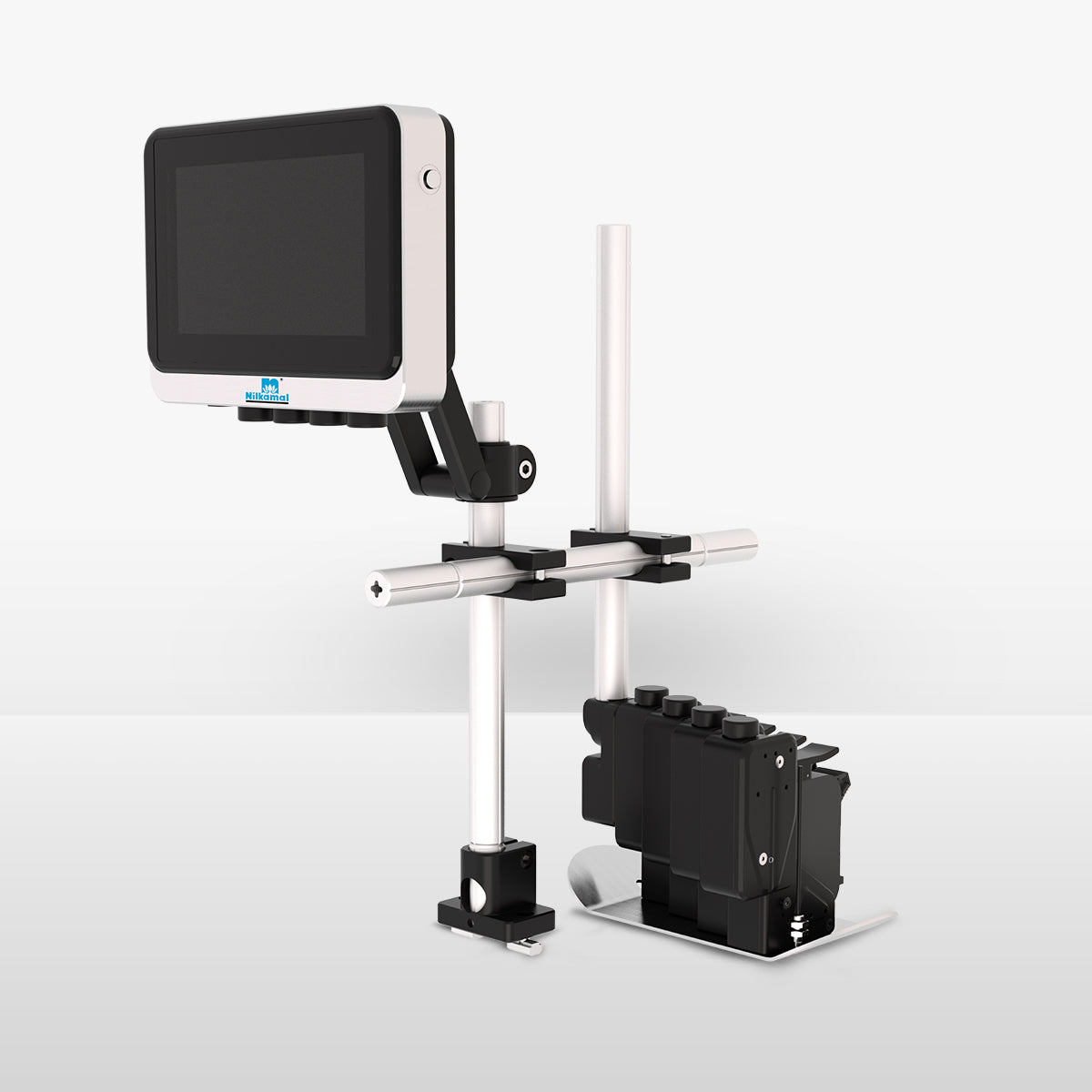
Thermal Inkjet Printer (TIJ) for High Resolution Batch Coding
The thermal inkjet printer (TIJ Printer) is an advanced coding solution for industrial applications that are highly efficient in printing high-quality codes at high speeds onto packaging surfaces. Leveraging cutting-edge TIJ technology, our printers are capable of producing accurate codes for batch coding, barcode, QR code, and variable data printing applications.
Our TIJ Inkjet Printers are tailored to address today’s manufacturing requirements.
What is TIJ Technology?
The TIJ technology uses thermal heat to quickly warm up ink within a cartridge, forming a vapor bubble that ejects ink droplets from micro nozzles on the substrate.
Key characteristics of TIJ technology:
- Non-contact printing method
- High-resolution output up to 600 DPI
- Cartridge-based ink system
- Low Maintainance
This makes TIJ printers ideal for industries that require clean, reliable, and high-quality coding.
How a Thermal Inkjet Printer Machine Works
- Ink is stored inside a sealed cartridge
- A heating element generates a bubble in the ink chamber
- The bubble expands and ejects a droplet onto the substrate
- The droplet creates precise characters, codes, or images
This process happens in milliseconds, enabling high-speed batch coding without compromising print quality.
Key Features of TIJ Inkjet Printers
High-Resolution Printing - Ability to print sharp text, logos, and barcodes with resolutions up to 600 DPI.
Maintenance Free - No pumps or pipes, no messy ink system, only replacement of cartridge is required when needed.
Compact & Easy Integration - Easy to install on existing conveyor and packaging and lines.
Quick Drying Inks - Compatible with quick drying ink on both porous and non-porous materials.
Smart User Interface - User-friendly controls for quick setup and very minimal operator training.
Benefits of Using a TIJ Printer
High-Quality Prints
TIJ printer provides sharp, high-quality, readable prints.
Reduced Operation Costs
There is no need for servicing, resulting in:
Reduced service cost
Reduced downtime
Lower consumables cost
Safe & Environmentally Friendly
Unlike traditional systems, TIJ inkjet printers are spill-free which creates no mess and is eco-friendly.
Reliable Batch Coding
Ideal for printing dates, MRP, and lot numbers.
TIJ batch coding machine is widely used for printing:
Manufacturing and expiry dates
Batch numbers and lot codes
QR codes and Barcodes
Logos and product info
Ideal surfaces include:
Cartons and corrugated boxes
Labels and paper packages
Plastics and coated materials
Foils and flexible packaging
Industries Using Thermal Inkjet Printers
- FMCG and Packaging
- Pharmaceutical Manufacturing
- Food and Beverage Industry
- Cosmetics and Personal Care
- Logistics and Warehousing
Thermal inkjet printer technology is used by these industries due to its precision, high-speed, and compliance.
TIJ Printer vs CIJ and Other Coding Technologies
|
Feature |
TIJ Printer |
CIJ Printer |
Laser Coding |
|
Print Quality |
High (600 DPI) |
Medium |
High |
|
Maintenance |
Very Low |
High |
Medium |
|
Consumables |
Cartridge-based |
Ink + solvent |
No ink |
|
Best For |
Cartons & packaging |
Bottles |
Permanent marking |
TIJ printers are best for clean, high-resolution packaging applications
Why Choose a Nilkamal's TIJ Inkjet Printer?
Modern manufacturers opt for thermal inkjet printers because they offer:
High-speed production compatibility
Excellent print clarity for regulatory compliance
Reduced maintenance and downtime
Easy scalability for multiple print heads
A TIJ batch coding machine is a smart investment for businesses aiming to improve efficiency and reduce costs.
Highlights

Thermal Inkjet Printer
Need a Thermal printer as tough and lasting as a continuous inkjet printer to fulfill your batch coding requirements? Look no further than Nilkamal’s thermal inkjet printers!
See It In Action
Fallback paragraph if no metafield is set.
- Choosing a selection results in a full page refresh.


